2026-10-21 ·
Oven Temperature Problems in Older Atherton Homes
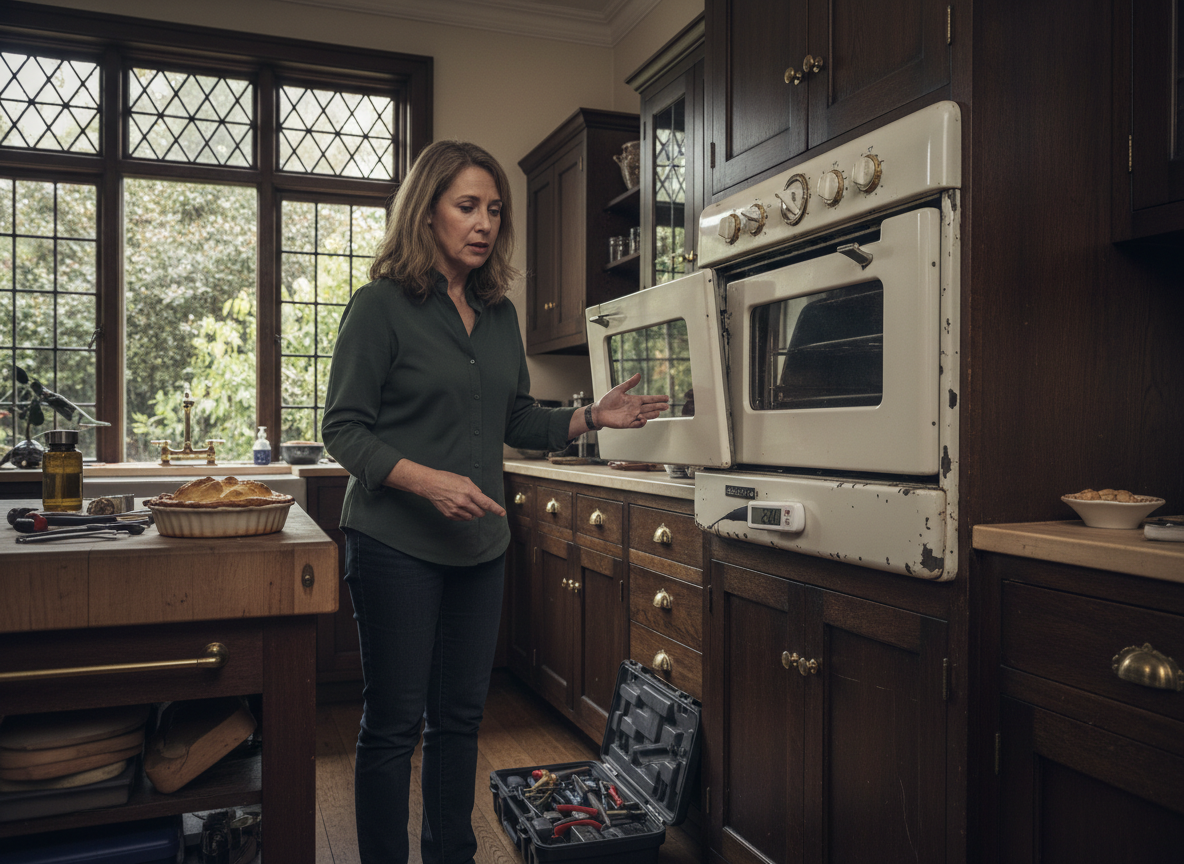
Oven temperature problems in older Atherton homes typically arise from thermostat calibration drift and sensor degradation after 15–20 years of service in the area's pre-1970 housing stock.
Age-Related Wear in West and East Atherton Residences
Homes near Menlo College and Holbrook-Palmer Park often retain original ovens installed when the properties were built. These units sit in kitchens with limited ventilation compared to newer builds, allowing heat cycling to loosen connections over time. In West Atherton, larger estates with multiple ovens see uneven wear because one unit handles daily loads while the second sits idle for months. East Atherton properties closer to the flats experience more frequent door seal compression from repeated use during family gatherings. Both areas share San Mateo County soil conditions that contribute to minor foundation shifts, which can tilt ranges slightly and affect internal temperature distribution. Technicians routinely find that 20-year-old models lose accuracy first at the 350°F and 425°F settings most used for roasting and baking.
Influence of Mild Mediterranean Climate
Atherton's cool summers reduce extreme heat stress on oven electronics compared to hotter inland zones, yet the consistent mild temperatures encourage year-round baking that keeps heating elements cycling daily. Moisture from the coastal influence can corrode terminal blocks behind the control panel when kitchens lack range hoods. Residents in neighborhoods bordering Redwood City report faster sensor failure during the brief winter rains when indoor humidity rises. This pattern differs from nearby Menlo Park homes where newer construction includes better sealing. The result is gradual offset rather than sudden failure, so homeowners notice cakes sinking or roasts over-browning before realizing the oven runs 25–50°F off set point.
Practical Temperature Verification Steps
Begin by placing an oven thermometer on the center rack and running a 30-minute preheat to 350°F. Note the reading after the preheat cycle completes and again after 15 minutes. Repeat the test at 425°F to check consistency across common ranges. If readings vary more than 25°F, remove the back panel to inspect the sensor probe for kinks or corrosion. Clean any baked-on residue from the probe tip with a soft cloth. Avoid bending the capillary tube on older hydraulic thermostats during this inspection. These checks help isolate whether the issue lies in the sensor, the thermostat, or the bake element before scheduling service.
When Local Professional Oven Repair Makes Sense
Persistent offsets after basic cleaning point to component replacement rather than adjustment. In San Mateo County homes, technicians often replace the sensor and recalibrate the thermostat on the same visit because both parts degrade together. For properties near Holbrook-Palmer Park, scheduling during daylight hours allows full access to side panels without disturbing evening routines. Professional oven repair addresses these combined failures directly. Homeowners in adjacent Menlo Park can reference similar service patterns when comparing notes. Regular verification every six months prevents small drifts from ruining holiday meals common in Atherton households.